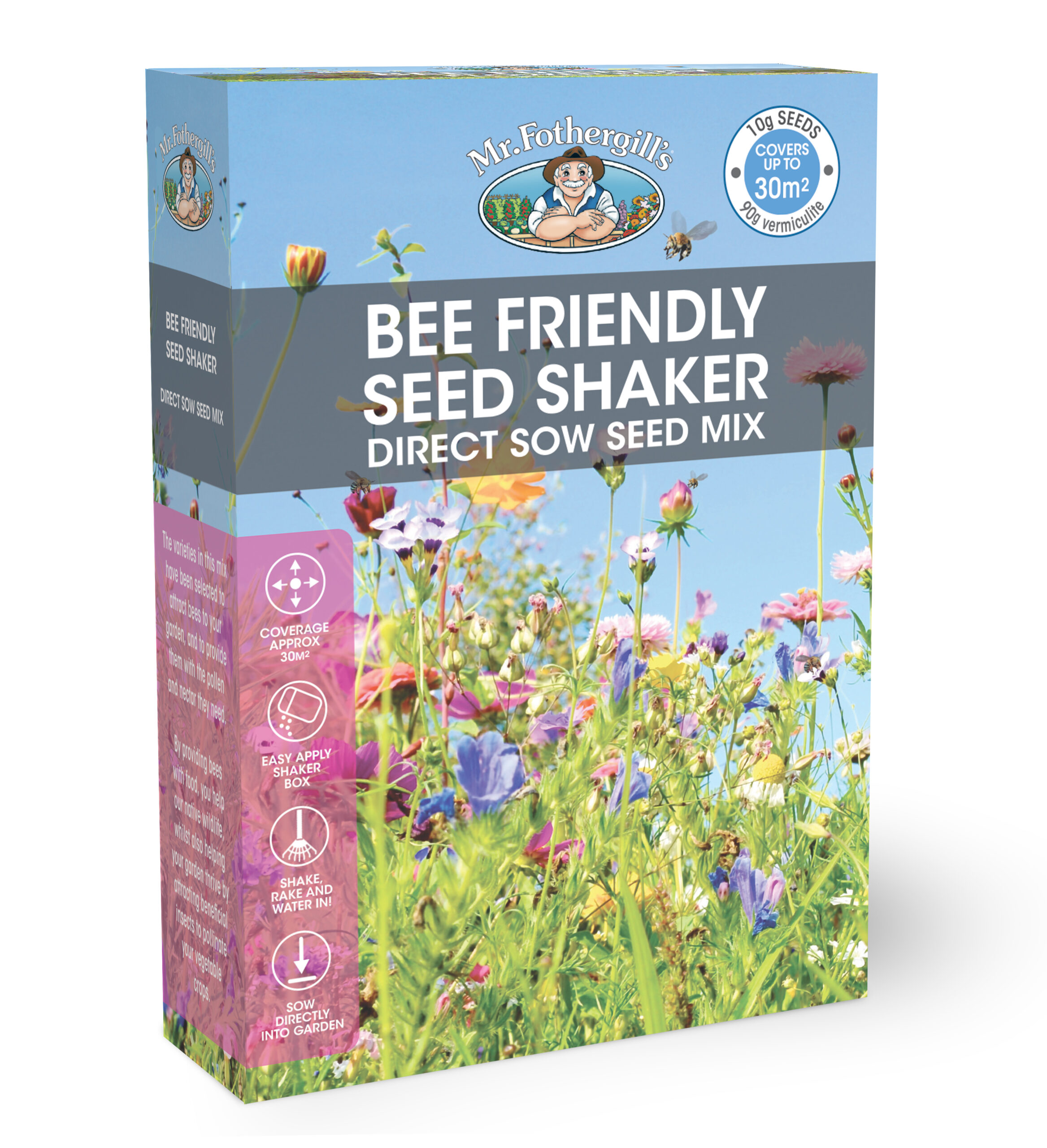

Bee Friendly Flower Seed Shaker
$15.00
Brand: Mr Fothergill’s
10g of seed (100g total weight)
There’s a hive of activity around protecting bees and butterflies this season! Mr Fothergill’s Bee and Butterfly Seed Shaker boxes are just what you need to create a pollinator-friendly flower garden. The varieties in this mix attract bees and provide them with the pollen and nectar they need to feed their offspring. By providing bees with flowers to feed on, you help both them and your garden flourish.
This Bee Friendly Flower Mix shaker contains 100g of Shake & Rake mix (10g seed and 90g vermiculite), enough to cover a 30m² area. The seed mix contains specifically selected bee-attracting flowers combined with vermiculite, a natural mineral that ensures even seed distribution, maintains moisture levels, and supports optimal germination.
Flower seeds included in this mix:
- Calendula (Calendula officinalis)
- Cornflower (Centaurea cyanus)
- Californian Poppy (Eschscholzia californica)
- Fineflower (Gilia leptantha)
- Toadflax (Linaria maroccana)
- Alyssum (Lobularia maritima)
- Wallflower (Erysimum cheiri)
- Nemophila (Nemophila menziesii)
- Poppy (Papaver rhoeas)
- Marigold African (Tagetes erecta)
- Chinese Forget-Me-Not (Cynoglossum amabile)
- Borage (Borago officinalis)
- Evening Primrose (Oenothera pallida)
- Lavender (Lavandula angustifolia)
- Native Violet (Viola hederacea)
- Swan River Daisy (Brachycome iberidifolia)
- Sage (Salvia officinalis)
How to Grow
To grow your Bee Friendly Flower Shaker mix, follow these simple steps:
- Prepare the chosen area for your seeds by turning or raking the soil until it is crumbly, removing stones and weeds as you go.
- Open the pouring spout on the side of the box and carefully shake out the seed mix thinly and evenly directly over the prepared area. You can sow thickly or thinly, depending on what look you want to achieve.
- Gently rake over the seedbed to lightly cover the seeds.
- Water well until the plants are established.
Sow at 2-3 week intervals for continuous flowering. Some perennial varieties may not flower until the second year.
Once the flowers appear, pollinating insects and bees will soon follow, and your garden will be a hive of activity!
[searchwp_form id=”1″]